
Moving to a new dentist in Calgary is a significant step for your long-term oral health, but the administrative process can often feel daunting. According to recent healthcare data, over 60% of patients experience delays in care continuity when transferring records due to incomplete paperwork or unclear insurance protocols. This guide provides a clear, step-by-step pathway to ensure your dental history moves seamlessly to your new provider, allowing them to make informed decisions about your treatment plan from day one. (Contact Us Pathways Dental)
Why Transferring Records Matters
Your dental records are not just a collection of old receipts; they are a critical medical history. They contain radiographs (X-rays), periodontal charts, treatment notes, and allergy information. Without these documents, a new dentist is essentially practicing blind. This can lead to redundant testing, which increases your out-of-pocket costs and exposes you to unnecessary radiation. (Affordable Calgary Dentist Dentistry)
When you choose a new provider, especially one that accepts a wide range of insurance plans, having your records ready accelerates the onboarding process. It allows the clinical team to focus on your current needs rather than spending valuable appointment time reconstructing your past. For patients in Calgary, this is particularly important given the high demand for emergency and general dentistry services in the region. (Affordable Calgary Dentist Dentistry)
Understanding Insurance and Fees
One of the most common questions patients ask is whether transferring records is covered by insurance. The answer is nuanced. Most dental insurance plans in Canada do not cover the administrative fee for transferring records. This fee is typically charged by the previous clinic, not the new one. However, some clinics may waive this fee if you are a new patient or if you are transferring records for legal or insurance claim purposes. (Dental Health Blog in)
At Pathways Dental Clinic, we understand that financial transparency is key to trust. We bill at the latest dental fee guide and even offer competitive rates for some procedures. When you contact your previous clinic, ask for a detailed breakdown of any transfer fees. Some clinics charge a flat rate, while others may charge per page or per X-ray. Knowing this upfront helps you budget for the transition.
Step-by-Step Request Process
Transferring your dental records does not have to be a complex ordeal. Follow these steps to ensure a smooth transition:
1. Contact Your Previous Clinic
Start by calling or emailing your current or previous dentist. Ask specifically for their Medical Records Department or Patient Services. Inquire about their specific requirements for record transfers. Some clinics require a signed release form, while others may accept a verbal request if you are present in person.
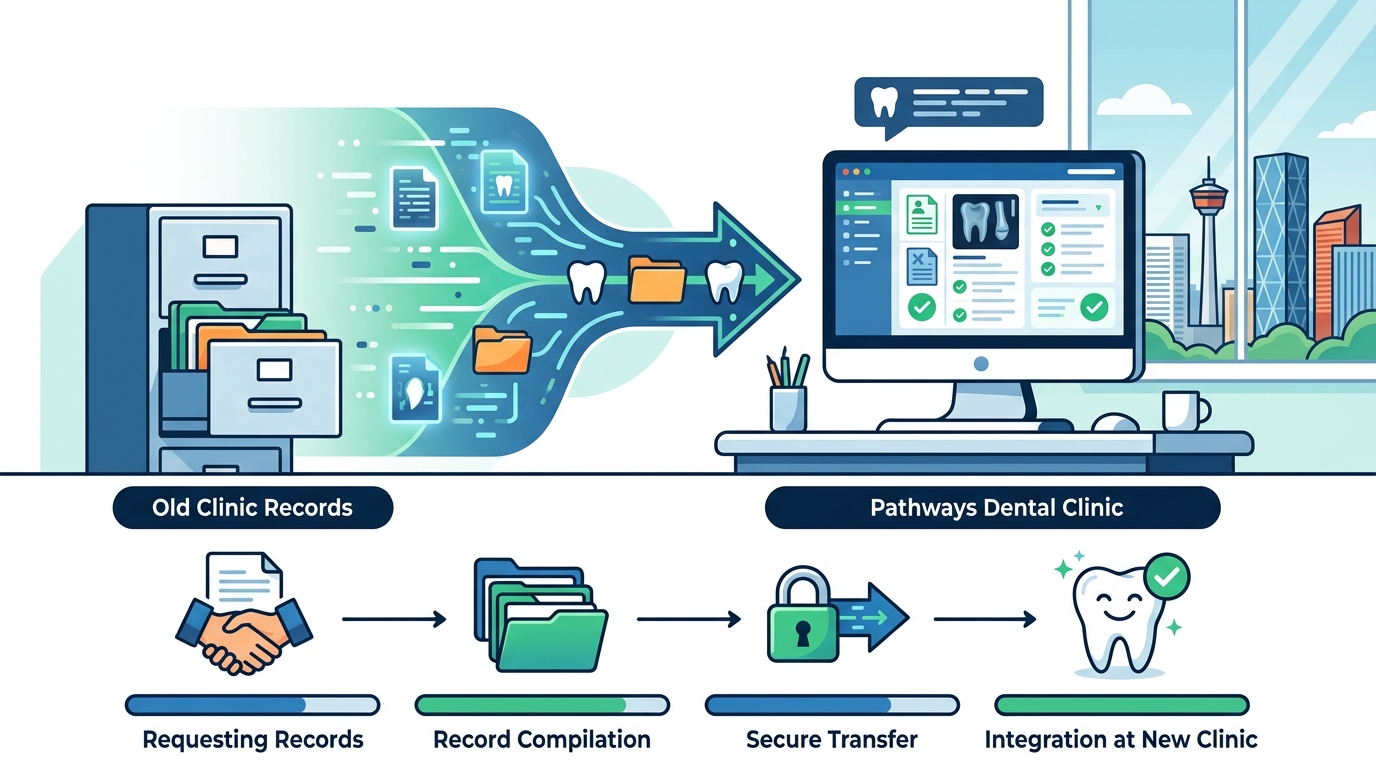
2. Sign a Release of Information Form
Under Canadian privacy laws, including the Personal Health Information Act (PHIA) in Alberta, your dental records are considered private health information. You must provide written consent for your records to be shared with another healthcare provider. This form will specify which records are being transferred and to whom. Ensure you sign and date the form before submitting it.
3. Specify the Records Needed
Be specific about what you need. Do you need all records, or just recent X-rays? Typically, a complete transfer includes:
- Current and past radiographs (X-rays)
- Periodontal (gum) charts
- Treatment plans and notes
- Medical history updates
- Any specialist reports (e.g., orthodontics, oral surgery)
4. Confirm the Delivery Method
Ask how the records will be delivered. Many clinics now offer digital transfers via secure email or cloud storage. If physical copies are required, ask about the estimated timeline for mailing or faxing. Digital transfers are generally faster and more secure, reducing the risk of lost documents.
Digital vs. Physical Formats
The format of your records can impact how easily your new dentist can use them. Digital records are increasingly the standard in modern dentistry. They allow for high-resolution viewing, easy sharing, and integration with electronic health records (EHR) systems.
| Format | Pros | Cons |
|---|---|---|
| Digital (PDF/CD) | Fast delivery, high quality, easy to store | Requires compatible software to view |
| Physical (Paper/X-ray Films) | Universal access, no tech required | Slower delivery, risk of damage or loss |
| Fax | Secure for sensitive data | Low resolution, can be illegible |
When possible, request digital copies. If your previous clinic only offers physical copies, ask if they can scan them first. This ensures you receive the highest quality images for your new dentist to analyze.
Common Challenges and Solutions
While the process is straightforward, patients often encounter a few common hurdles. Here is how to navigate them:
Challenge 1: The Previous Clinic is Unresponsive
If your previous clinic does not respond to your request, send a follow-up email or visit in person. If they continue to be unresponsive, you may need to file a complaint with the College of Dental Surgeons of Alberta. However, most clinics are required by law to respond within a reasonable timeframe, usually 30 days.
Challenge 2: High Transfer Fees
Some clinics charge exorbitant fees for record transfers. If this is the case, ask for a breakdown of the costs. In some cases, you may be able to negotiate a lower fee, especially if you are transferring a large volume of records. Alternatively, you can request only the most critical records, such as recent X-rays and treatment plans, to minimize costs.
Challenge 3: Insurance Misunderstandings
Some patients believe their insurance will cover the transfer fee. As noted earlier, this is rarely the case. However, some insurance plans may cover the cost of new X-rays taken at the new clinic if they are deemed medically necessary. Always check with your insurance provider to understand your coverage for new diagnostic tests.
Key Takeaways
- Consent is Mandatory: You must sign a release of information form to transfer your records legally.
- Fees Apply: The previous clinic typically charges a fee for record transfers, which is not covered by insurance.
- Digital is Preferred: Request digital copies (PDF or CD) for faster, higher-quality transfer.
- Be Specific: Clearly list the records you need to avoid unnecessary charges for irrelevant data.
- Timing Matters: Start the process at least two weeks before your first appointment at the new clinic.
- Verify Receipt: Confirm with your new dentist that they have received and can access the records.
- Pathways Dental Clinic: We accept all major insurance plans and offer transparent billing practices to support your transition.
Frequently Asked Questions
How long does it take to transfer dental records?
Most clinics process record transfers within 5 to 10 business days. However, this can vary depending on the volume of records and the method of delivery. Digital transfers are typically faster than physical mail.
Do I have to pay for my dental records?
Yes, most clinics charge a reasonable fee for copying and transferring records. This fee covers administrative costs and is not covered by dental insurance. The amount varies by clinic but is regulated by provincial guidelines.
Can I get my records directly from my dentist?
Yes, you have the right to access your own medical records. You can request a copy for your personal files. However, it is often more efficient to have the records sent directly to your new dentist to ensure continuity of care.
What if my previous dentist is no longer in practice?
If your previous dentist has retired or moved, their records are typically transferred to another practice or held in secure storage by the College of Dental Surgeons of Alberta. Contact the College for guidance on how to access these records.
Do I need to transfer all my records?
Not necessarily. You can request specific records, such as recent X-rays or treatment plans. However, providing a complete history helps your new dentist make the most informed decisions about your oral health.
How do I know if my new dentist accepts my insurance?
Most modern clinics, including Pathways Dental Clinic, accept all major insurance plans. You can verify this by contacting the clinic directly or checking their website. We also offer direct billing to many insurance providers to simplify the process for you.
What is the Canadian Dental Benefit Program?
The Canadian Dental Benefit Program is a new federal initiative aimed at providing dental coverage for eligible families. It may help cover some of the costs associated with dental care, including new treatments at your new clinic. Check your eligibility through the official government portal.
Next Steps
Transferring your dental records is a crucial step in ensuring seamless, high-quality care at your new clinic. By following the steps outlined above, you can avoid delays and ensure your new dentist has the information they need to help you achieve optimal oral health.
If you are looking for an affordable, patient-centered dentist in NE Calgary, Pathways Dental Clinic is here to help. We accept all major insurance plans and offer a range of services, from general dentistry to cosmetic procedures. Our team is dedicated to providing compassionate care in a comfortable environment.
Book your appointment today to start your journey with Pathways Dental Clinic. We look forward to welcoming you to our family.